NZ Solar Guide
Solar Panel Recycling and End-of-Life in New Zealand

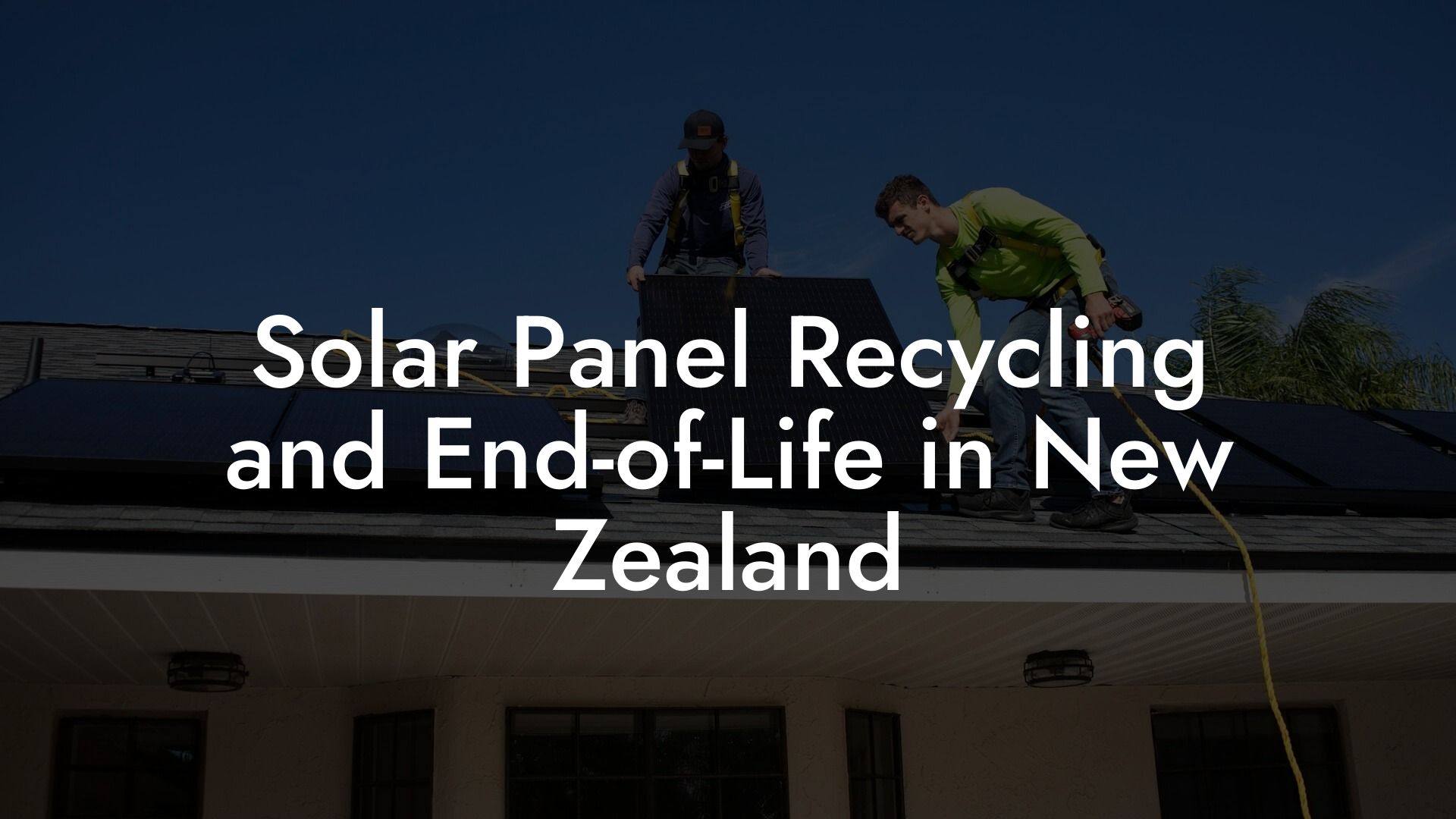
Here is the honest answer most websites dance around: when your solar panels reach the end of their working life in 25 to 30 years, New Zealand does not yet have a dedicated, nationwide panel recycling scheme. What we do have is a growing handful of operators who will take panels apart and recover the aluminium, glass and copper, plus a serious push from the industry body SEANZ and government work under the Waste Minimisation Act toward a proper product stewardship scheme. A modern panel is roughly 80 to 85% recoverable by weight (mostly glass and aluminium frame), so the material problem is genuinely solvable. The gap right now is logistics and scale, not technology.
If you are weighing up solar partly because you care about the planet, this is exactly the right question to ask. There is no point reducing your carbon footprint for 25 years only to leave a pile of toxic landfill at the end. So let's deal with it properly, with real numbers and no hand-waving.
First, the timeline is longer than you think
The panels going on Kiwi roofs today are not the panels your neighbour will be ripping off in five years. Most quality modules sold in New Zealand carry a 25-year performance warranty and a 10 to 15-year product warranty, and the reality is they often keep producing well beyond that.
A typical performance warranty guarantees the panel still produces around 80 to 87% of its original output at year 25. That is degradation, not death. Plenty of panels installed in Aotearoa in the early 2010s are still humming along producing useful power today.
So when we talk about "end of life", we are usually talking about one of three things:
- Genuine old age: a panel that has quietly degraded past the point of being worth the roof space, typically 25 to 35 years in.
- Premature failure: a delamination fault, a cracked cell, or water ingress that takes a single panel out early. This is a warranty matter, not a recycling one.
- Early replacement by choice: a homeowner upgrading to higher-output panels, or a re-roof that means everything comes off anyway.
If your output has dropped suddenly rather than gradually, do not assume the panel is finished. Sudden drops are almost always something fixable like a tripped inverter, a shading issue, or a string fault. We walk through how to diagnose that properly over here: Why Has My Solar Output Dropped? A Troubleshooting Guide.
What is actually inside a panel (and what is recoverable)
This matters, because "is it recyclable?" depends entirely on what the thing is made of. A standard silicon panel, the type on the vast majority of NZ homes, breaks down roughly like this by weight:
- Glass: around 70%. The tempered front sheet. Fully recoverable and the heaviest component.
- Aluminium frame: around 10 to 15%. High-value, endlessly recyclable, and the easiest part to strip and sell.
- Polymer backsheet and encapsulant (EVA): around 10%. The fiddly bit. Plastics laminated tightly to the cells.
- Silicon cells: around 3 to 5%. The actual semiconductor.
- Copper, silver and other metals: roughly 1 to 2%. Small amounts, but the silver in particular is valuable.
The headline most people miss: the bulk of a panel is glass and aluminium, two of the most established recycling streams we have. The aluminium frame and the junction box are usually removed first and recovered easily. The hard part is separating the laminated layers cleanly enough to recover the high-value silver and silicon, which needs either thermal or chemical processing.
That is the genuine technical frontier worldwide, and it is why "recycling" today often means recovering 80%-plus of the mass while a smaller, high-value fraction is harder to capture economically. The material is not toxic landfill waiting to happen; it is mostly building-grade glass and metal.
What are the actual options in New Zealand right now?
Here is where you need straight talk rather than greenwash. As of 2025, your realistic end-of-life pathways in NZ are:
1. Specialist e-waste and panel recyclers
A small but growing number of operators handle solar panels as part of broader e-waste processing. They strip the aluminium frame, recover the glass, and divert the recoverable metals. Coverage is patchy and concentrated in the main centres, so if you are rural or in the South Island's smaller districts, you may need to freight panels or wait for a collection point.
The reason this is still fragmented comes down to volume. New Zealand simply has not yet generated a large enough wave of dead panels to justify a dedicated, fully automated recycling plant the way Europe has. That changes over the next decade as the first big wave of 2010s installs ages out.
2. Product stewardship and the regulated future
This is the important bit, and it is genuinely good news. Solar panels have been flagged in New Zealand's waste policy work as a candidate for regulated product stewardship under the Waste Minimisation Act 2008, the same framework already declared for priority products like tyres, e-waste, and refrigerants.
The Ministry for the Environment has been progressing regulated stewardship schemes precisely so that the people who put a product on the market carry responsibility for its end of life, rather than dumping the cost on the homeowner or the council tip. SEANZ, the Sustainable Energy Association of New Zealand, has been actively pushing for a solar-specific scheme. The direction of travel is clear: by the time today's panels retire, there should be a far more organised take-back system than exists now.
3. Reuse before recycling
Here is the angle almost nobody mentions, and it is the most sustainable option of all. A panel producing 82% of its rated output is "retired" from a premium rooftop, but it is perfectly good for a shed, a sleepout, a remote pump, an off-grid bach, or a community project. There is a quiet secondhand market for used panels in NZ, and a 15-year-old panel still pulling decent watts has real life left in it.
From a kaitiakitanga point of view, extending a working panel's life by another decade beats recycling it every time. Recycling is the floor, not the goal.
The unique bit: why your installer choice today affects your recycling outcome in 2050
This is the insight the sales reps will not raise, because it complicates the pitch. Your end-of-life experience is being decided right now, at the point you sign a quote, not in 2050.
Three things determine whether your panels are easy or painful to deal with at end of life:
- Brand longevity. A Tier 1 manufacturer with a long track record is far more likely to still exist (and still honour take-back commitments) in 25 years. Cut-price panels from a brand that vanishes after three seasons leave you with orphaned waste and a worthless warranty. The cheapest panel on the quote can become the most expensive one to retire.
- Documentation. Keep your panel datasheets, serial numbers and install paperwork. When a stewardship scheme arrives, traceability will make handover smoother and may affect whether collection is free.
- Installer relationship. A reputable installer who is still trading is your natural first port of call for removal, reuse referral, or recycling drop-off. The fly-by-night operator who quoted suspiciously low will not be answering the phone.
In other words, the most environmentally responsible thing you can do for the panel's death is to buy a good panel from a good installer at the start. This is one more reason we are so firm about getting multiple quotes and reading them line by line. If you want to see what separates a solid quote from a dodgy one, start with the proper numbers from vetted installers: Get 3 Free Quotes From Vetted Installers.
A worked example: what end of life might actually cost a household
Let's make this concrete with a realistic scenario. Picture a family on a 1990s brick-and-tile place in Rolleston, Canterbury, sitting on the Orion network. They install a 6.6kW system (around 16 panels) today.
Fast forward to roughly 2050. The panels are at maybe 80% output. The family decides to upgrade. Here is the rough shape of the end-of-life maths, in today's dollars:
- Removal labour: a few hundred dollars of an electrician and roofer's time to safely de-energise and remove the array. Often bundled into the cost of a new install.
- Transport to a recycler: modest if you are near a main centre, more if you are freighting from a smaller district.
- Recycling/processing fee: currently variable, and one of the things a future stewardship scheme is designed to reduce or remove for the homeowner.
- Offset by reuse value: if the panels still work, they may have a small secondhand value rather than a cost.
The honest point: this is a minor, manageable, one-off cost decades into the future, not a looming environmental or financial disaster. Compare that to the 25-plus years of generation the system delivered. If you want to see how that lifetime generation stacks up financially, our cost and payback tool runs the numbers for your situation: The Solar System Cost & ROI Calculator.
What about the inverter and the battery? They die first
Worth flagging, because people fixate on the panels and forget the components that actually fail sooner.
Your inverter is the part you are most likely to replace mid-life. String inverters typically last 10 to 15 years, so most owners will swap one at least once over the panels' lifetime. Inverters are standard electronic e-waste and go through established e-waste channels.
Batteries, if you have one, are the bigger end-of-life conversation. Modern lithium home batteries are warrantied for around 10 years and are genuinely recyclable, with battery recovery being a fast-developing area in NZ given the parallel growth in EVs. The valuable metals inside a battery (lithium, cobalt, nickel) make recovery commercially attractive in a way that low-value panel glass is not, so battery recycling infrastructure is arguably ahead of panel recycling here.
Keeping an eye on inverter and battery health over the years is just sensible ownership. We cover how to actually watch your system's performance through the monitoring apps over here: How to Monitor Your Solar Production (App Guide).
Be honest: where the recycling story still falls short
Brand honesty means naming the gaps. So here they are:
- No nationwide scheme yet. If your panel failed and needed disposal tomorrow, you would have to find a recycler yourself, and depending on where you live, that is genuinely inconvenient. This is improving, but it is not solved today.
- The high-value fraction is hard. Recovering the silicon and silver cleanly is technically demanding, so a portion of every panel is currently downcycled rather than truly recycled.
- Regional inequality. A homeowner in Auckland or Christchurch has options. A homeowner in, say, the Far North on the Top Energy network, or the West Coast, faces freight distances that make small-volume recycling awkward until collection networks mature.
- Cowboy installers muddy the water. A panel from a defunct brand with no paperwork is harder for any future scheme to handle cleanly.
None of this is a reason not to go solar. It is a reason to buy well, keep your paperwork, and expect the disposal landscape to be markedly better by the time it matters to you.
What to actually do, practically
If end-of-life responsibility matters to you, here is how to take control of it:
- Ask your installer the direct question: "What happens to these panels at end of life, and do you offer or refer a take-back or recycling pathway?" A good operator will have a sensible answer. A blank stare tells you something.
- Favour established, Tier 1 panel brands with a long manufacturing history. Longevity of the maker matters as much as longevity of the panel.
- File your documentation somewhere you will find it in 25 years: datasheets, serial numbers, the installation certificate, and warranty terms.
- Maintain the system properly so panels reach their full natural lifespan rather than failing early. A clean, well-kept array lasts longer. We cover the right way to do that without voiding warranties here: Cleaning and Maintaining Solar Panels in New Zealand.
- Plan to reuse before you recycle. When you do upgrade, ask whether the old panels can find a second home before they go anywhere near a recycler.
For the bigger picture on living with and looking after a system across its whole life, we keep the full owner's playbook here: Owning Your Solar System.
Frequently Asked Questions
Are solar panels toxic waste?
No. A standard silicon panel is roughly 70% glass and 10 to 15% aluminium frame, with only small amounts of metals like copper and silver inside. The bulk of it is ordinary, recoverable building material. The concern people have usually relates to certain thin-film panel types containing trace heavy metals, which are uncommon on NZ rooftops, where standard crystalline silicon dominates.
Can solar panels actually be recycled in New Zealand right now?
Partly. There are specialist e-waste and panel recyclers operating, concentrated in the main centres, who recover the aluminium, glass and metals. There is not yet a dedicated nationwide scheme, but solar has been identified for possible regulated product stewardship under the Waste Minimisation Act 2008, so a more organised take-back system is likely well before today's panels retire.
How long do solar panels actually last?
Most quality panels sold in NZ carry a 25-year performance warranty guaranteeing around 80 to 87% of original output at year 25. In practice many keep producing useful power for 30 years or more. They degrade gradually rather than stopping, so "end of life" is a judgement call about whether the output still justifies the roof space.
What costs more to dispose of, the panels or the battery?
Neither is expensive, but they go through different streams. Panels are low-value glass and metal, so recovery is less commercially driven. Batteries contain valuable lithium, cobalt and nickel, which makes recycling them commercially attractive, and that infrastructure is developing quickly in NZ alongside the EV market.
Does the inverter get recycled too?
Yes. The inverter is standard electronic waste and goes through established e-waste channels. It is also the component you are most likely to replace mid-life, since string inverters typically last 10 to 15 years while the panels carry on much longer.
Can I sell or reuse my old panels instead of recycling them?
Often, yes, and it is the most sustainable option. A panel still producing around 80% of its rating is fine for a shed, sleepout, remote pump, or off-grid project. There is a quiet secondhand market for used panels in NZ, and extending a working panel's life beats recycling it every time.
Will I be left with a disposal bill in 25 years?
If you had to deal with it entirely yourself today, there would be a modest cost for removal and recycling. But it is a minor one-off cost decades away, often bundled into an upgrade, and regulated product stewardship work is specifically aimed at reducing or removing that cost for homeowners. Set against 25-plus years of generation, it is a small line item.
Does choosing a cheaper panel brand affect recycling later?
It can. A budget panel from a brand that disappears leaves you with orphaned waste and a worthless warranty, and harder handling under any future take-back scheme. A long-established manufacturer is far more likely to still exist and honour commitments decades later, so panel quality at purchase quietly shapes your end-of-life experience.
The bottom line
Solar in Aotearoa is a genuinely sustainable choice, and the end-of-life question, while real, is far smaller than the sales-free internet sometimes makes it sound. Most of a panel is recoverable, the timeline is decades away, reuse extends life further, and the country is steadily building toward a proper stewardship scheme. The single most powerful thing you can do for the planet at the end is to make a good buying decision at the start: a quality panel, a reputable installer, and your paperwork kept safe.
Where to go from here
If you are at the start of that journey, the most useful next move is to understand what a fair, honest system actually costs on your roof, and to compare it properly against the lifetime value it delivers. Our cost and payback tool at The Solar System Cost & ROI Calculator is the place to start, and the full owner's playbook at Owning Your Solar System covers everything from monitoring to maintenance once the panels are up.
And when you are ready to talk real numbers, the smartest thing you can do is get a few honest quotes side by side, then read them line by line. That single habit protects you on price, on panel quality, and on the end-of-life outcome decades down the track.