NZ Solar Guide
What Happens When the Grid Goes Down? Solar and Outages

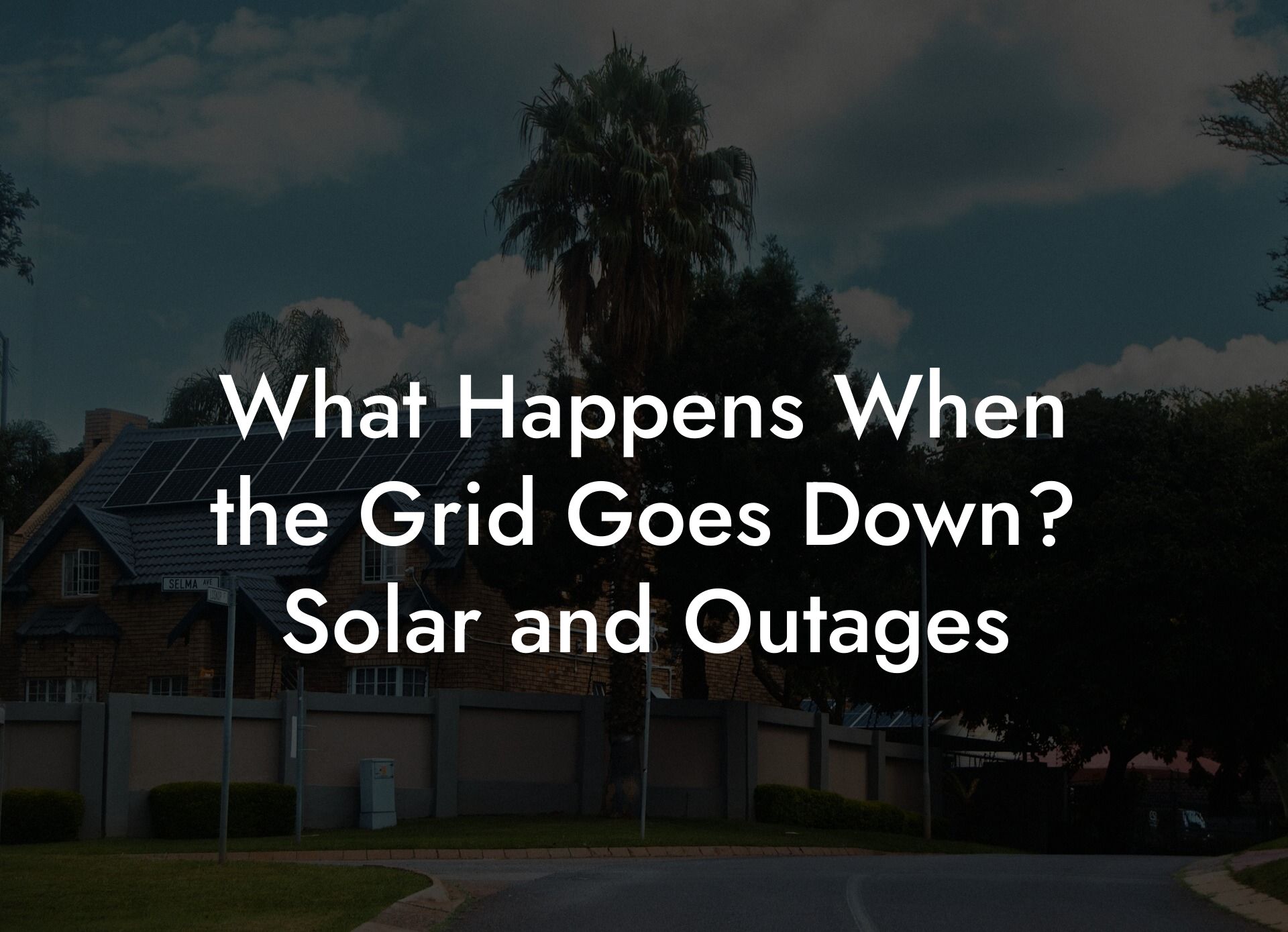
Here's the part the sales brochure tends to skip: a standard grid-connected solar system shuts down the moment the power goes out, even at midday in full sun. Your panels could be soaking up a perfect Nelson summer afternoon and your house will still be dark. To keep the lights on during an outage you need a battery with specific backup hardware, and that typically adds $1,000 to $3,000-plus on top of the battery cost for a backup-capable inverter and a protected circuit, based on current NZ installer pricing. Without that gear, solar and a blackout do not mix. Let me explain exactly why, and what it takes to fix it.
Why your solar switches off in a blackout
It feels deeply unfair. You spent fifteen grand on panels, the sun is blazing, and yet when a storm takes out the lines your fridge dies along with everyone else's on the street. This is not a fault. It is the system working exactly as designed and as required by law.
The reason is a safety feature called anti-islanding, and once you understand it, the whole thing makes sense.
The lineworker problem
When the grid goes down, lines crews head out to fix it. They work on the assumption that the wires they are touching are dead. If your solar system kept pushing power out onto the network during an outage, you would be energising lines that a worker believes are safe. That is a genuine electrocution risk, and a backfed line can also damage equipment when the grid comes back.
So every grid-connected inverter sold in New Zealand is built to detect the absence of the grid and disconnect within a fraction of a second. This is mandated under the inverter connection standard AS/NZS 4777.2, which all installers and lines companies (Vector, Orion, Wellington Electricity, Aurora and the rest) require compliance with before they will approve your connection.
The term "islanding" describes a situation where a chunk of the network keeps running on local generation while cut off from the main grid, like an island. Anti-islanding is the inverter's job of refusing to let that happen. It is non-negotiable, it is sensible, and it is the single biggest reason ordinary solar gives you nothing in a blackout.
The myth that costs people money
The genuinely dangerous misunderstanding is the homeowner who buys solar partly as insurance against outages, never asks the right question, and only discovers the truth during the first big storm. We have seen people in the Far North (Top Energy territory, where rural outages can run long) assume their new array would carry them through. It did not. The inverter shut off at the first flicker.
If outage protection matters to you, you must say so before you sign anything. The hardware to do it is a specific choice made at design stage, not something you bolt on as an afterthought. Retrofitting backup capability to a system that was not built for it often means swapping the inverter entirely, which is expensive and wasteful.
How to actually keep the lights on: battery backup
To run your house when the grid is down, you need three things working together:
- A battery to store energy.
- A hybrid or backup-capable inverter that can form its own "grid" inside your house.
- A protected circuit or backup gateway that physically isolates your home from the network during an outage.
That third piece is the clever bit. A backup-capable system uses an automatic transfer switch (often called a backup gateway or automatic changeover device) that disconnects your home from the grid the instant it detects an outage. Now your house is a genuine island, safely walled off from those dead lines outside. Within that island, the inverter is free to power your circuits from the battery and, crucially, let your solar panels keep generating.
This is the part people miss: once the home is safely islanded, a properly specified system recharges the battery from your panels during the day, even mid-outage. In a multi-day West Coast storm with intermittent sun, that can be the difference between a fridge that survives and one full of spoiled food.
Whole-home backup versus partial backup
Here is a distinction installers do not always volunteer, and it matters enormously for your budget.
Whole-home backup tries to keep everything running. It is the dream, but it is expensive and often impractical, because a single battery cannot supply the surge a hot water cylinder, an oven and an induction hob demand all at once. You either need a big battery, multiple batteries, or careful load management.
Partial (essential loads) backup is the smart, common choice. At install, you nominate a handful of circuits that stay alive during an outage: the fridge and freezer, some lights, internet and phone chargers, maybe the heat pump in one room. Everything else (the oven, the dryer, the second bathroom's heated towel rail) goes dark until the grid returns.
Partial backup is far kinder on your wallet and on the battery. A modest battery can carry a well-chosen essential circuit for a long time. Trying to run the whole house off the same battery might drain it in an hour.
What this costs in real New Zealand dollars
Let's be specific, because vague pricing is where homeowners get burned.
A typical residential battery in 2025 (in the 10kWh to 13.5kWh range) runs roughly $11,000 to $18,000 installed, depending on brand and inverter, per current NZ installer quoting. That figure is for a grid-tied battery doing self-consumption and load-shifting. It does not automatically include blackout backup.
Adding genuine outage protection means:
- A backup-capable hybrid inverter (if not already specified): often a few hundred to a couple of thousand dollars more than a standard one.
- A backup gateway / automatic transfer switch: commonly $1,000 to $3,000 installed depending on the brand and how your switchboard is wired.
- Possible switchboard rewiring to separate your essential circuits, which adds electrician time.
So the all-in premium for "keeps working in a blackout" over "just stores energy" is realistically $1,500 to $4,000 on top of the battery. Worth knowing before you fall in love with a glossy spec sheet.
A worked example: a Wairarapa lifestyle block
Picture a family on a few hectares out past Carterton, on the Powerco network, where storm outages of several hours are a normal part of winter. They run a 6.6kW array and add a 13.5kWh battery with whole-of-essentials backup.
They nominate the fridge, chest freezer, kitchen lights, the lounge heat pump, the Wi-Fi and a couple of power points. During a six-hour evening outage, those loads might draw an average of 0.6kW to 0.8kW, so the battery comfortably carries them with charge to spare. Come morning, the panels top the battery back up. For this household, the backup premium pays for itself in peace of mind the first winter, before you even count the freezer full of home-kill they did not lose.
Now picture their neighbour with the identical array and battery, but no backup gateway, because the lower quote did not include one and nobody asked. Same gear, same sun, and their house goes dark right alongside everyone else's. The difference is entirely in the design choices made before signing.
Where battery backup genuinely makes sense (and where it doesn't)
Honesty time. Backup is not for everyone, and plenty of households are better off skipping it.
It makes real sense if:
- You live somewhere with frequent or long outages. Rural Top Energy, parts of the West Coast, exposed Wairarapa and Coromandel lines all see this.
- You have a genuine medical dependency on power (a CPAP machine, refrigerated medication, a stairlift). For this group, backup is not a luxury.
- You work from home and an outage costs you real income.
- You have a freezer full of food that an extended outage would ruin.
It makes less sense if:
- You are in a dense urban area on a robust network (much of suburban Auckland on Vector, or central Christchurch on Orion) where outages are rare and short.
- Your budget is tight and the backup premium would blow out an otherwise sensible solar payback.
- You are buying a battery purely for the financial return, in which case the backup hardware is a cost that earns you nothing on a normal day.
That last point is worth dwelling on. A battery's day-to-day economics come from storing low-cost or self-generated power and using it at peak times, which depends heavily on your retailer's rates. The backup gateway adds zero to that return. It is pure insurance. So decide whether you are buying a financial product or an insurance product, because the maths is completely different.
The retailer angle most people miss
Here is a subtle one. A battery sized and wired for backup is often configured to hold a reserve charge so it always has something in the tank if the grid drops. That reserve is energy you are not using to shift your bill or sell back.
If your retailer pays a strong daytime or peak buy-back rate, every kilowatt-hour you hold in reserve "just in case" is a kilowatt-hour you are not exporting for credit. On some of the sharper export plans, that reserve has a real opportunity cost. Plans like Octopus Energy's OctopusPeaker and OctopusFlexi, Ecotricity's Resi-Flex peak export, and Meridian's solar buy-back plans all reward exporting at the right moments, and a backup reserve quietly nibbles at that.
It is not a reason to skip backup. It is a reason to set your reserve level deliberately rather than leaving it at the installer's default. We walk through how buy-back rates actually stack up in our full rundown of solar tariffs and retailers, and you can model your own numbers with the buy-back engine to see what a held reserve genuinely costs you.
What about running solar without a battery in an outage?
People ask whether there is any way to use panels alone during a blackout. The short answer for almost every NZ home is no.
A handful of inverters offer a limited "secure power supply" outlet: a single socket that delivers a small amount of power straight from the panels while the sun shines, with no battery involved. In practice it is fiddly, the output drops every time a cloud passes, it delivers nothing at night, and it is rare on New Zealand installs. Treat it as a curiosity, not a backup plan. If outage resilience matters, a battery with a proper gateway is the real answer.
What to ask before you sign
If keeping power during an outage matters to you, put these questions to every installer, in writing:
- "Does this design provide backup during a grid outage, yes or no?" Make them answer plainly.
- "Is the inverter backup-capable, and is a backup gateway or transfer switch included in the price?" Check it is itemised on the quote, not assumed.
- "Which circuits stay live during an outage, and which go dark?" Get the essential loads list in writing.
- "Will the panels recharge the battery during a daytime outage?" A well-designed system will. Some lower-spec setups will not.
- "How quickly does it switch over, and will I notice a flicker?" Good systems change over in under a second; some have a brief blip.
- "What reserve charge is set for backup, and can I adjust it?" This protects your buy-back income.
If an installer is vague on any of these, slow down. Outage backup is a precise engineering choice, and a quote that glosses over it is a quote that has probably left it out.
Frequently asked questions
Does normal solar work during a power cut?
No. A standard grid-connected system shuts off the instant the grid fails, even in bright sun, because of a safety feature called anti-islanding required under AS/NZS 4777.2. To have power during an outage you need a battery plus a backup-capable inverter and a transfer switch.
Why can't my panels just power the house directly when the grid is down?
Because your inverter cannot safely tell the difference between powering only your house and accidentally backfeeding the dead network outside, which would endanger lines crews. A backup gateway solves this by physically isolating your home first, but plain grid-tied systems do not have one.
How much extra does blackout backup cost on top of a battery?
Realistically $1,500 to $4,000 for a backup-capable inverter (if not already fitted) and an automatic transfer switch or backup gateway, plus any switchboard rewiring, based on current NZ installer pricing. The backup hardware adds nothing to your day-to-day savings, so treat it as insurance.
How long will a battery run my house in an outage?
It depends entirely on which loads you keep live. A 13.5kWh battery running essentials like a fridge, freezer, lights, internet and one heat pump might last many hours to a couple of days. Try to run the whole house, including the oven and hot water, and you could flatten it in an hour or two.
Will my solar recharge the battery during a long outage?
With a properly specified backup system, yes. Once your home is safely islanded, the panels can keep topping up the battery during daylight, which is what makes solar plus battery genuinely useful for multi-day outages. Confirm this is included, as lower-spec designs sometimes do not allow it.
Do I need backup if I live in a city with reliable power?
Probably not. If you are on a robust urban network like Vector in suburban Auckland or Orion in central Christchurch, outages tend to be rare and brief, and the backup premium often is not worth it. Backup earns its keep where outages are frequent, long, or where someone in the home depends on power for medical reasons.
Is a generator a better option than battery backup?
For rare, long rural outages, a generator can be lower-cost upfront and runs as long as you have fuel. A battery is silent, automatic, fume-free and doubles as a daily money-saving device, whereas a generator sits idle most of the year. Many resilient homes end up with both for different jobs.
Can I add backup to my existing solar system later?
Sometimes, but it is often expensive. If your current inverter is not backup-capable, you may need to replace it entirely or add a separate hybrid inverter and battery setup. It is far more cost-effective to design backup in from the start, which is why you should raise it before you sign anything.
The Bottom Line
Ordinary solar will not keep your lights on in a blackout, and anyone who lets you believe otherwise is doing you a disservice. The fix is real but specific: a battery, a backup-capable inverter, and a transfer switch that safely islands your home so the panels can keep working while the lines outside stay dead and safe.
Decide honestly whether you are buying insurance or buying savings, because the two need very different designs. If it is the financial return you are chasing, the smartest move is to nail your retailer plan first, since that is where a battery actually earns its keep. Have a proper read of how the tariffs and buy-back rates compare, then run your own figures through the buy-back engine before you commit a single dollar.