NZ Solar Guide
Our Recommended Solar Setups by Budget and Home Size

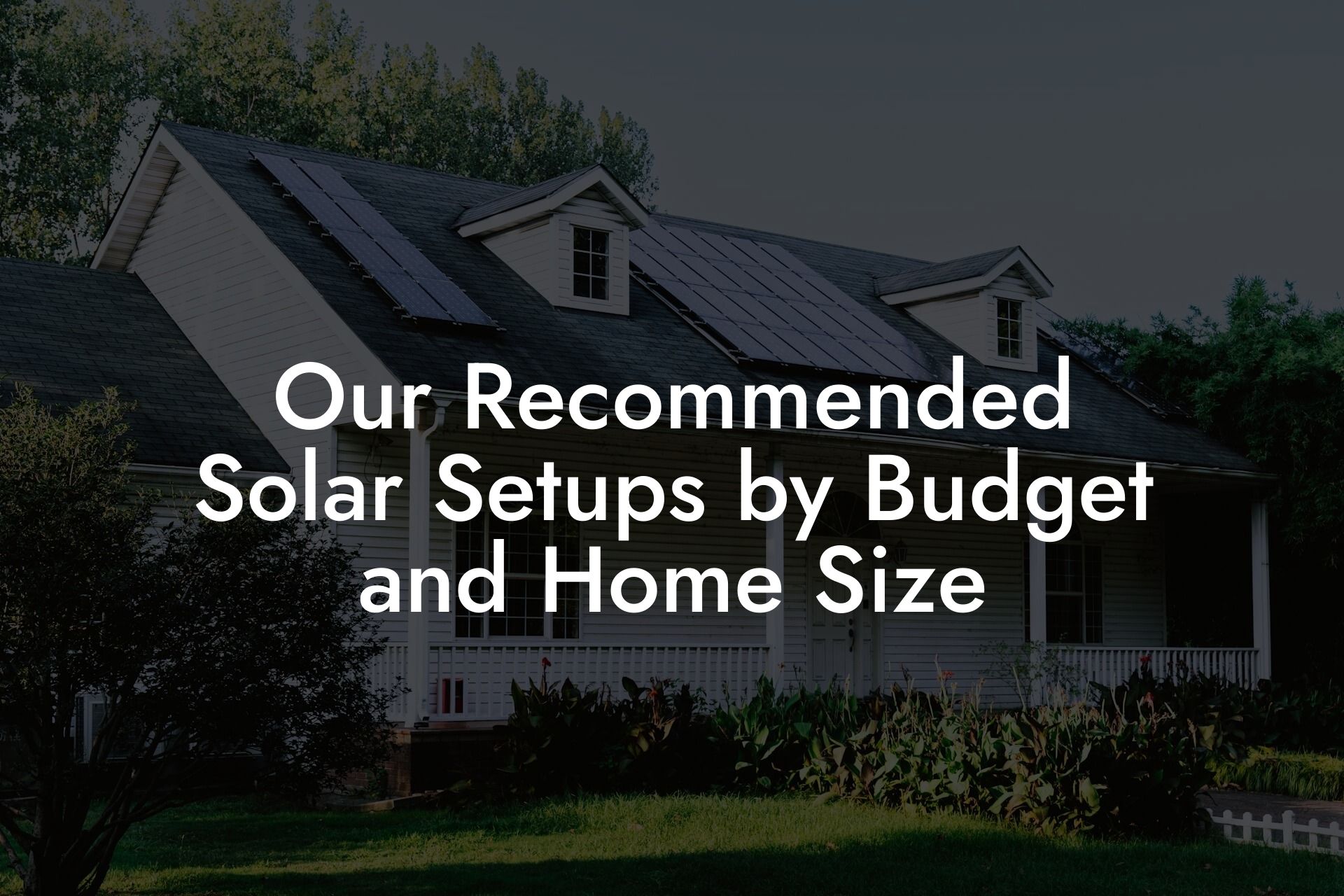
For most New Zealand homes, the sweet spot in 2025 is a 6.6kW solar system with no battery, fully installed for roughly $11,000 to $14,000 (around $1.70 to $2.10 per watt, per current installer pricing and MBIE's market data). That setup suits a typical three or four bedroom family home on a single network connection, and it's where the maths pencils out cleanest. Smaller homes and tight budgets can do real work with a 4kW to 5kW array from about $8,000 to $11,000. Bigger homes with an EV, a pool, or a battery plan should be looking at 8kW to 10kW, often $15,000 to $22,000 installed. Below we break it down by what you've actually got: your roof, your power habits, and your budget.
The hard part isn't the technology. It's that almost no one will give you a straight "if you're this household, buy this" answer, because every installer is quoting their own kit. So here's the opinionated version, grouped the way you'd actually shop: by what you can spend and how big your place is.
First, the three numbers that decide everything
Before any shortlist, three things set the size of your system. Get these roughly right and the rest follows.
- Your daytime power use. Solar only saves you serious money when you use the power you generate. Sell it back to the grid and you'll typically get 7 to 17 cents per kWh on current buy-back rates, while you pay 28 to 40+ cents to buy it back at night. Self-consumption is the whole game.
- Your roof. A clean, north-facing roof in Blenheim is a different animal to a south-pitched, shaded roof in Wellington. Orientation and shading change your real output more than the panel brand ever will.
- Your budget and how long you'll stay. Solar pays back over 7 to 12 years in most NZ cases, per modelling consistent with EECA guidance. If you're selling in three, the maths is different.
If you want to put your own roof and your own power bill into a model before you read on, our cost and ROI calculator does exactly that. It's worth five minutes.
The tight budget pick: under $11,000
Best for: smaller homes, one or two people, retirees watching every dollar
If you're on a fixed income or you just don't want to overspend, you do not need a big system. A 4kW to 5kW array, no battery, $8,000 to $11,000 installed is the honest entry point that still does real work.
Picture a two-bedroom 1970s home in Hamilton, two retirees home most of the day, running a heat pump and the usual appliances. A 5kW system here will cover a big chunk of daytime load. Because they're home during the day, their self-consumption is naturally high, which is exactly what makes a modest system pay.
What to buy at this level:
- 10 to 13 panels of a reputable Tier-1 brand. Tier-1 is a financial bankability rating, not a quality grade, so don't overpay chasing the label. We explain exactly what it does and doesn't mean over here: what Tier-1 actually tells you about your warranty.
- A single-phase string inverter (5kW) from a known brand. Don't pay for microinverters unless you have genuine shading.
- No battery. At this budget, a battery eats your whole spend and the payback stretches out badly.
The honest limit: this won't zero a winter bill. NIWA's sunshine data shows even sunny regions lose a big slice of generation across June and July. A small system in winter is a top-up, not a replacement. That's fine. You're buying the lowest-cost kilowatt-hours you'll ever own across the year, not chasing zero.
The value sweet spot: $11,000 to $15,000
Best for: the standard NZ family home, three or four bedrooms, kids, a heat pump or two
This is where most households should land, and it's the band we'd point the majority of readers to. A 6.6kW system, no battery, $11,000 to $14,000 installed is the workhorse of New Zealand solar in 2025.
Why 6.6kW and not a round 6 or 7? Because a 6.6kW panel array paired with a 5kW inverter is a deliberately efficient combination. You slightly oversize the panels relative to the inverter, so you harvest more in the shoulders of the day and on cloudy West Coast mornings, without paying for a bigger inverter you'd rarely max out. Most installers won't explain why they're quoting that odd number; that's the reason.
Take a 1990s four-bedroom place in Rolleston on the Orion network, two working parents, two kids, a heat pump, and dishwasher and washing runs you can shift to daytime. A 6.6kW system here, with a bit of load-shifting discipline, will knock a meaningful chunk off the annual bill. Canterbury's clear, cold winters actually help: panels are more efficient in the cold, and Central and Canterbury get genuinely sunny winter days that the upper North Island's humidity can rob you of.
What to buy at this level:
- 15 to 18 panels, modern N-type cells if the price is close. N-type panels handle heat and low light slightly better, which matters more here than most quotes admit. We compare the two cell types for NZ conditions properly here: N-type vs P-type for the New Zealand climate.
- A 5kW single-phase inverter from a well-supported brand, or a hybrid inverter if a battery is on your two-year horizon (more on that below).
- A consumption meter / monitoring so you can actually see your self-consumption and shift loads. Skipping this is a false economy.
The battery question at this budget: if you can stretch to it, the smart move is often a hybrid inverter now and a battery later. You spend a few hundred dollars more on the inverter today so you're not ripping it out when you add storage. Whether a battery ever pays for itself is genuinely household-specific, and we don't sugar-coat it; the deciding factor is your evening and overnight use, not the brochure.
The bigger setup: $15,000 to $22,000+
Best for: large homes, EV charging, pools, or a serious battery plan
Once you add an EV, a spa or pool, or you simply have a big roof and big bills, you're into 8kW to 10kW territory, $15,000 to $22,000 installed, more again once a battery goes on.
An EV changes the maths in your favour, and this is the bit most people miss. Charging a car at home overnight is a big, controllable load. If you can shift that charging to daytime solar (or pair it with a battery), you're self-consuming power that would otherwise have sold back for cents. A two-storey five-bedroom home in Karaka on the Vector network, a heat pump in every zone, a pool pump, and a daily-driver EV is a textbook case for 9kW to 10kW.
What to buy at this level:
- 20 to 26 panels. On a big single-phase home, watch your network's export limit. Vector and several other lines companies cap how much you can push back to the grid, often around 5kW to 10kW depending on your connection. Your installer should check this with the lines company before quoting; if they don't mention it, push them.
- A hybrid inverter, sized for the battery you plan to add. On larger or three-phase homes, this may be a three-phase unit.
- A battery of 10kWh or more if your evening and overnight use justifies it, plus a smart EV charger that can be told to draw from solar.
The honest limit: a big system with a big battery is the most expensive way to feel energy-independent, and the payback is the longest of any setup here. It can absolutely be the right call for the right household, but go in with your eyes open. If someone's pitching you a $30,000 system on the promise it'll wipe out your power bill entirely, that's the line that should make you walk. A grid-tied home still has a connection and still buys winter power.
A worked example, the way you'd actually compare it
Here's the same four-bedroom Christchurch family, three quotes, to show how the band changes the outcome.
- Quote A, 5kW, $9,500: covers their easy daytime load, modest annual saving, fastest payback per dollar spent. Leaves generation on the table on sunny days.
- Quote B, 6.6kW, $12,800: the value pick. Captures more of the year, handles the heat pump and daytime appliance runs, payback in the 8-to-10-year range on typical Canterbury figures. This is the one we'd back for them.
- Quote C, 9.9kW + 10kWh battery, $24,000: only worth it once that EV arrives and they commit to charging it on solar. Without the EV, they're exporting a lot at low buy-back rates and the battery payback drags.
Same house. The "right" answer is entirely about how and when they use power. Anyone who quotes you a system without first asking how much electricity you use during the day is guessing.
The trap nobody warns you about: the quote that hides the inverter
Here's the one that costs people the most. A quote will headline the panel wattage and brand in big friendly numbers, then bury the inverter in a single line you'll skim past. The inverter is the brain of the system and the part most likely to fail first; a poorly-supported budget inverter on lovely panels is a system that goes dark and stays dark while you wait for a part.
So when you compare quotes, give the inverter equal billing to the panels. Ask:
- What brand and model is the inverter, and who supports it in New Zealand? If the answer is vague, that's your answer.
- Is it a hybrid (battery-ready) or string inverter? Spending a little now saves a rip-out later.
- What's the inverter warranty versus the panel warranty? Panels often carry 25-year performance warranties; inverters frequently only 5 to 10. Know the gap.
If you want to get properly across the kit before you talk to anyone, start with our plain-English run-down of the main components: the full guide to NZ solar hardware. And if you've seen a specific N-type panel quoted, our look at two of the popular ones is here: our review of DAS Solar and Tongwei N-type panels.
How to match a setup to your home in five minutes
- Find your daytime use. Check your power app or bill for how much you use while the sun's up. High daytime use favours a bigger system; mostly-evening use favours a smaller one plus a battery later.
- Check your roof aspect. North is best, east and west still work well, south is the weak performer. Note any tree or neighbour shading.
- Set your budget band from the three above and pick the system size that matches.
- Decide your battery and EV horizon. If either is likely within two years, get a hybrid inverter now.
- Get three quotes and compare like-for-like, inverter included, export limit confirmed with your lines company.
Frequently Asked Questions
What size solar system does the average NZ home need?
For a typical three or four bedroom household, a 6.6kW system is the common sweet spot, costing roughly $11,000 to $14,000 installed on current pricing. Smaller homes and lower daytime use can do well on 4kW to 5kW. The real driver is how much power you use during daylight hours, not the number of bedrooms.
Is it worth getting a battery straight away?
Often not at first. A battery roughly doubles a system's cost and its payback is the longest part of any solar setup. The deciding factor is your evening and overnight power use. A common middle path is to fit a hybrid (battery-ready) inverter now and add storage later once you've watched your real usage for a season.
Why do installers quote 6.6kW instead of a round number?
Because pairing a 6.6kW panel array with a 5kW inverter is deliberately efficient. The slightly oversized array harvests more in the early morning, late afternoon, and on cloudy days, without paying for a larger inverter you'd seldom max out. It's a sensible default, not a sales trick.
Will solar cover my whole power bill?
No grid-tied home should expect that, and anyone promising it is overselling. NIWA's sunshine figures show even sunny regions lose a large share of generation across June and July. Solar gives you the lowest-cost power you'll own across the year and trims your bill significantly, but you'll still buy grid power in winter and overnight.
Does panel brand matter more than inverter brand?
The inverter deserves at least as much attention. It's the component most likely to fail first and the one that determines whether your system stays online. Many quotes spotlight the panels and bury the inverter; treat them as equally important and ask who supports the inverter in New Zealand.
Do I need to worry about export limits?
Yes, especially on larger systems. Lines companies such as Vector cap how much power you can push back to the grid, and the limit varies by connection. Your installer should confirm your specific limit with the lines company before finalising a system size. If they skip it, raise it yourself.
What's a fair installed price per watt in 2025?
Expect roughly $1.70 to $2.10 per watt for a quality, fully installed grid-tied system without a battery, consistent with current installer pricing and MBIE market data. Very small systems cost more per watt; larger ones a bit less. If a quote is far below that, scrutinise the inverter and the warranty terms.
Is solar worth it if I'm selling within a few years?
The payback runs 7 to 12 years for most NZ homes, so if you're moving in two or three, you may not bank the savings yourself. Solar can lift a property's appeal, but treat any sale-price uplift as a bonus, not a guarantee. If you're staying put, the maths is far kinder.
The Bottom Line
Match the system to your home, not to the brochure. Most New Zealand families land best on a 6.6kW array with no battery, smaller homes on 4kW to 5kW, and big homes with an EV or pool on 8kW to 10kW with a hybrid inverter ready for storage. The single biggest lever isn't the panel brand; it's how much of your own power you use during the day.
From here, it's worth running your real numbers through the ROI calculator so the payback is yours and not an average, and getting properly across the kit with the hardware guide before any installer turns up. Go in knowing your daytime use and your roof, and you'll spot a good quote in about thirty seconds.