NZ Solar Guide
Review: DAS Solar & Tongwei N-Type Panels

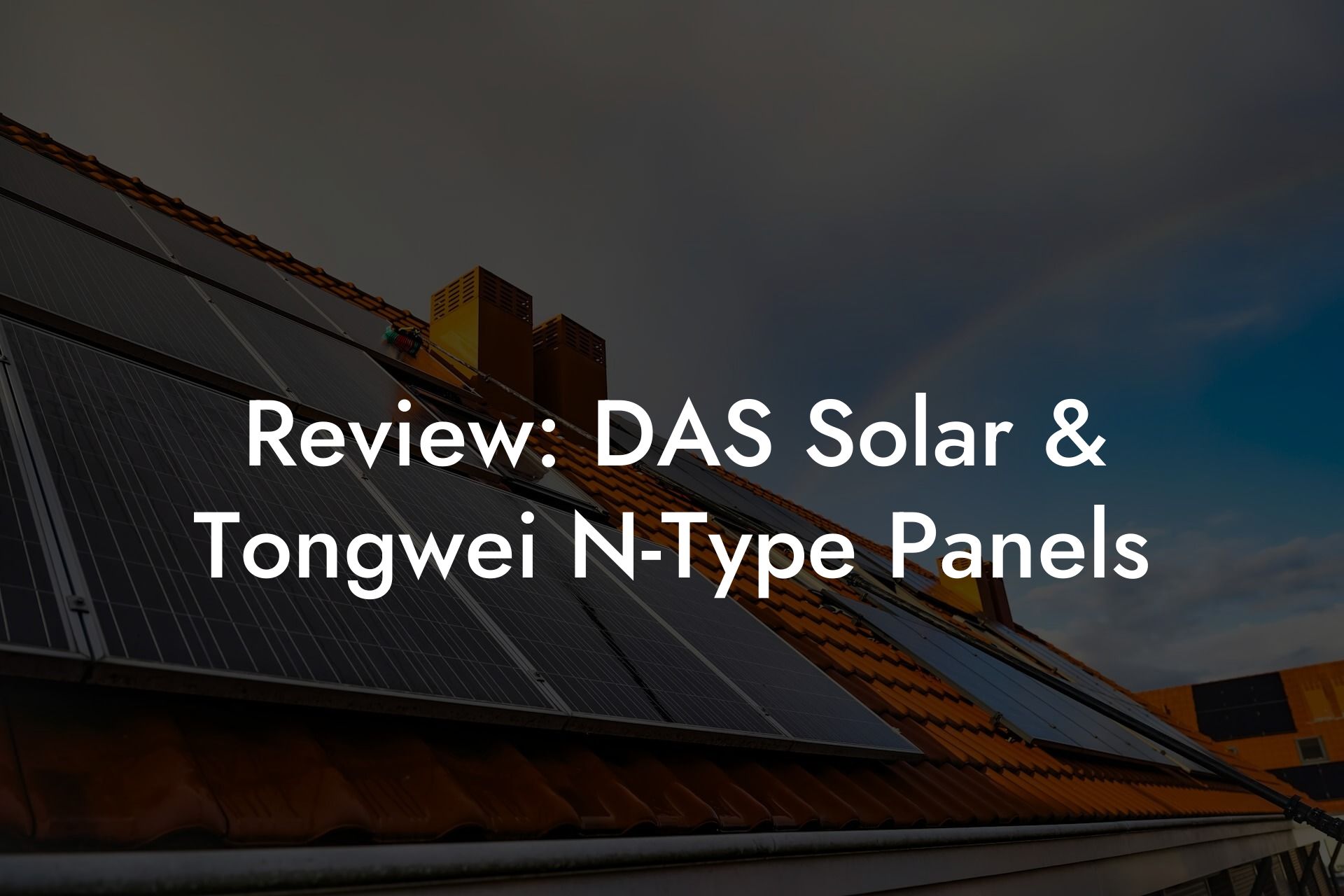
Both DAS Solar and Tongwei (TW Solar) are legitimate, high-output N-type panels worth shortlisting in New Zealand, and on a fully installed basis you'll typically see them in systems priced around $1.70 to $2.10 per watt in 2025 (so roughly $9,000 to $12,000 for a 5kW system, in line with the installed pricing MBIE and EECA reference). The honest catch is that neither brand has the long, deep New Zealand track record of a Jinko or a Trina, so the real question isn't "is the panel any good" (it is), it's "who's distributing and warranting it here, and will they still be around in fifteen years to honour the paper." That's where the decision actually lives.
Why these two panels keep turning up in NZ quotes
If you've gathered a few quotes lately, you may have noticed DAS Solar or Tongwei appearing where you might once have expected the usual suspects. There's a simple reason: both are enormous, vertically integrated manufacturers pushing modern N-type cell technology at sharp prices, and NZ installers are always hunting for a panel that delivers more watts per dollar without dropping to no-name tier.
Tongwei is one of the largest solar cell makers on the planet by volume. For years they made the cells that ended up inside other brands' panels, and they've since moved into selling finished modules under their own name (TW Solar). DAS Solar is newer to the finished-panel game but has gone hard on N-type, particularly their TOPCon range, and they've made noise about pushing efficiency higher than many competitors.
So the underlying hardware is serious. The interesting part for a Kiwi homeowner is how that hardware lands here, what the warranty actually means in practice, and whether the value holds up once you account for support.
The technology: N-type TOPCon, and why it suits NZ
Both brands lead with N-type TOPCon cells rather than the older P-type PERC technology that dominated the last decade. This matters more in our climate than the marketing suggests, and it's worth understanding before you sign anything.
N-type panels generally offer three things that genuinely help in New Zealand conditions:
- A better temperature coefficient. Panels lose output as they heat up. N-type modules typically degrade less per degree, which matters on a Nelson or Hawke's Bay roof in February when panel surface temps climb well past the air temperature.
- Lower light-induced degradation. N-type doesn't suffer the same first-year power drop that plagued older P-type panels, so you keep more of your rated output from day one.
- Better performance in diffuse light. This is the underrated one for us. A lot of NZ generation happens under broken cloud, not blazing sun. Auckland and the West Coast in particular see plenty of overcast days, and N-type tends to hold up better in that weaker, scattered light.
We go deep on the technical side of this over here if you want the full picture: N-type vs P-type solar cells and which suits the NZ climate. The short version is that for a roof you intend to keep for two decades, N-type is the sensible direction of travel, and both DAS and Tongwei are squarely in that camp.
DAS Solar: the specifics
DAS Solar's residential N-type modules typically land in the 440W to 470W range for the panel sizes most NZ installers fit on homes, with module efficiencies often quoted around 22% to 22.5%. That's genuinely strong; it means more watts squeezed onto a given area of roof, which helps if your usable roof space is limited (think a narrow Wellington townhouse or a villa where the dormers eat into the north face).
The headline warranty is usually a product (workmanship) warranty of 12 to 15 years and a performance warranty of 25 to 30 years, with first-year degradation around 1% and an annual degradation rate often quoted near 0.4%. On paper, that's excellent. The performance figures are competitive with anything on the market.
The thing to be clear-eyed about: DAS Solar is a relatively young brand in finished-module terms, and brand-newness is a risk you carry for the life of the system, not just at purchase. A 30-year performance warranty is only worth what the entity behind it is worth in year 27.
Tongwei (TW Solar): the specifics
Tongwei's residential N-type panels sit in a similar band, commonly 435W to 460W for typical home formats, with efficiencies around 22%. Warranty structure is comparable: a product warranty in the 12 to 15 year range and a performance warranty out to 25 to 30 years.
Tongwei's quiet advantage is manufacturing depth. Because they make cells at vast scale and supply much of the industry, their cell quality control is mature in a way a newer entrant's simply can't be yet. If you value the certainty of a manufacturer who has been making the core component for a very long time, Tongwei has a real edge there.
Their disadvantage in the NZ market mirrors DAS Solar's: the brand name itself isn't yet a household word among local installers the way Jinko and Trina are, even though the underlying company is a giant. That's a distribution and familiarity gap, not a quality gap.
The bit the installers don't always volunteer: a panel warranty is only as good as the NZ distributor behind it
Here's the insight that should drive your decision, and it's one most reviews skate over entirely.
When a panel fails, you do not ring a factory in China. You ring the installer who fitted it, and if they've gone under, you ring the New Zealand distributor who imported it. The manufacturer's glossy 30-year warranty is a promise made through a chain, and the weakest link in that chain in NZ is usually the local importer, not the factory.
This is the genuine risk with any newer brand here. Ask yourself, and then ask the installer directly:
- Who is the New Zealand distributor for these panels? Get the company name. Not "the supplier", the actual name.
- How long have they distributed this brand in NZ? Two years is very different from eight.
- Do they hold stock of these exact panels locally? This matters enormously. If a single panel fails in year six, can they replace it with a matching module, or has that model been discontinued, leaving you with a mismatched string?
- What happens to my warranty if my installer goes out of business? A reputable distributor will honour the product warranty directly. A thin one will leave you stranded.
This is precisely where the "Tier 1" label gets misunderstood. Tier 1 is a banking and bankability ranking, not a quality or local-support measure. Both Tongwei and DAS Solar appear on Tier 1 lists, but that tells you the factory is financeable, not that there's someone in Penrose holding replacement stock for you. We unpack that distinction properly here: what Tier 1 actually means for your warranty. Read it before you let a salesperson use the phrase as a closing argument.
What fair value actually looks like in 2025
Let's put real numbers on a typical job, because "good value" is meaningless without a dollar figure.
A 6.6kW system (a common size on a three-bedroom NZ home) using DAS Solar or Tongwei N-type panels, paired with a reputable inverter and properly installed, should land you somewhere around $11,000 to $14,500 fully installed in 2025, depending on roof complexity, region, and whether you're adding monitoring or extra optimisers. That works out near $1.70 to $2.20 per watt, which aligns with the installed cost range MBIE and EECA reference for residential solar.
Where these brands earn their place is at the value end of that range. Because the panels are priced keenly, a quote built on DAS or Tongwei N-type might come in a few hundred dollars under an equivalent Jinko or Trina system of the same size and inverter. That saving is real, but it should never be the whole story.
Here's how to think about it plainly:
- If the saving is $300 to $600 on a $13,000 system and the local support is solid, that's good buying.
- If the saving is the only reason the panel is being offered, and the installer can't name the NZ distributor, the saving is borrowed against your future warranty claim.
To see how the panel choice flows through to your actual payback, it's worth running your own numbers rather than trusting a sales sheet. Our solar cost and ROI calculator lets you plug in system size and your own power usage to see roughly where you land.
How these stack up against the brands you've heard of
The benchmark most Kiwi homeowners are quietly comparing against is Jinko and Trina, simply because they're everywhere here and have a long local presence. If you're weighing those two, we put them head to head here: Jinko vs Trina in New Zealand.
Against that benchmark:
- On the panel itself, DAS Solar and Tongwei N-type modules are genuinely competitive. Efficiency, temperature behaviour and warranty terms are in the same league. You're not buying a lesser panel.
- On local track record, Jinko and Trina win on years-in-market and the sheer number of NZ roofs running them. That history is worth something when you're betting on a 25-year relationship.
- On price, DAS and Tongwei often have a small edge, which is exactly why installers reach for them.
It's not that one is right and one is wrong. It's that the newer brands ask you to do a little more homework on the support chain in exchange for sharper pricing.
Who these panels genuinely suit, and who should think twice
Being straight with you: these are good panels, but they're not the right call for everyone.
They make sense if:
- You're getting them through a well-established installer who can name a solid NZ distributor and ideally holds stock locally.
- You want strong N-type performance at the keener end of the price range and you're staying in the home long term.
- You have limited roof space and want the higher watts-per-panel that the efficiency buys you.
Think twice if:
- The installer is a one-person operation with no clear distributor relationship, and the only reason these panels are on the quote is to hit the lowest price. If both the installer and the importer are thinly capitalised, your warranty has two fragile links instead of one.
- You're planning to sell the house within a few years. The panel brand barely moves a sale price in NZ, so the long-warranty advantage mostly benefits a long-term owner. Buy on installed quality and price, not on the badge.
- You're being asked to pay a premium for these over a Jinko or Trina system. That defeats the entire point; their value proposition is keen pricing, not a price premium.
What to do before you sign
A few practical moves that take ten minutes and protect you for two decades:
- Get the exact model number of the panel in writing on the quote, not just the brand. "DAS Solar N-type" is not enough; you want the full model code so you can verify the datasheet and warranty terms yourself.
- Ask for the NZ distributor's name and check they have a real presence here. A quick company search tells you a lot.
- Confirm the product (workmanship) warranty length, not just the performance warranty. The product warranty is the one that covers the panel physically failing, and 12 to 15 years is the band you want.
- Check the inverter brand too. An excellent panel on a weak inverter is a false economy, and the inverter is statistically more likely to need attention first. The panel review is only half the hardware story; the rest is covered in our guide to NZ solar hardware and tech.
- Get more than one quote. The same panel can appear in two quotes at very different installed prices. Comparing like for like is the single best way to know you're getting fair value.
Frequently Asked Questions
Are DAS Solar and Tongwei panels any good?
Yes. Both use modern N-type TOPCon cell technology with efficiencies around 22% and warranty terms comparable to the better-known brands. The hardware is genuinely competitive. The real homework is on local distribution and support, since both are newer names on NZ roofs than Jinko or Trina.
Is Tongwei the same as TW Solar?
Yes, TW Solar is Tongwei's finished-module brand. Tongwei is one of the world's largest solar cell manufacturers and has long supplied cells to other panel makers before selling complete panels under its own name.
How much should a system using these panels cost in New Zealand?
Expect roughly $1.70 to $2.20 per watt fully installed in 2025, so around $9,000 to $12,000 for a 5kW system or $11,000 to $14,500 for a 6.6kW system, depending on roof complexity and region. That's consistent with the installed cost ranges MBIE and EECA reference for residential solar.
Will the panel warranty be honoured if my installer goes out of business?
That depends entirely on the New Zealand distributor, not the factory overseas. A well-established local distributor will typically honour the product warranty directly if your installer disappears. This is exactly why you should get the distributor's name in writing before you sign.
Are these panels Tier 1?
Both appear on Tier 1 lists, but Tier 1 is a measure of how financeable the factory is, not a quality grade or a guarantee of local support. It tells a bank the manufacturer is bankable; it tells you nothing about whether someone in New Zealand holds replacement stock for you.
Do N-type panels really perform better in NZ conditions?
Generally yes. N-type panels tend to have a better temperature coefficient (helpful on hot summer roofs) and hold up better in diffuse, overcast light, which matters a great deal given how much NZ generation happens under broken cloud rather than clear sun.
Should I pay more for DAS or Tongwei over a Jinko or Trina system?
No. The whole value case for these brands is keen pricing. If you're being asked to pay a premium over an equivalent Jinko or Trina system, the logic falls apart. They earn their place at the keener end of the price range, not above it.
Can a single failed panel be replaced years later?
Only if the distributor still holds, or can source, a matching module. With newer brands, models can be discontinued, which can leave you with a mismatched panel in a string. Ask the installer directly whether the distributor stocks the exact model locally.
The bottom line
DAS Solar and Tongwei make good, modern N-type panels that deserve a spot on your shortlist, particularly if you want strong performance at a keen installed price. The panels themselves are not the risk. The risk, as with any newer brand here, sits in the support chain: who imports them, whether they hold stock, and whether that distributor will still be standing when you need them in a decade or more.
Treat the brand decision as one input, not the whole job. The installer's reputation and the strength of the local distributor matter more to your 25-year outcome than which N-type badge is on the glass. If you want to understand how every part of the system fits together before you commit, start with our overview of NZ solar hardware and tech, then run your own figures so you walk into the quote conversation knowing what fair looks like.
Where to Go From Here
If you've narrowed your shortlist to these brands, your next move isn't more reading about cells and efficiency; it's pinning down the local detail that actually protects you. Get the full model number on the quote, get the NZ distributor's name, and confirm the product warranty length in writing.
From there, line up at least two or three comparable quotes so you can see the same panel priced like for like. If you want to sanity-check the payback before you commit, run your own numbers through our solar cost and ROI calculator, and read up on what Tier 1 really means so no one can use the phrase to close you. Do that homework and you'll walk into the conversation knowing exactly what fair looks like, badge or no badge.